104randomized trials
9,617people
Music lowers stress, in body and mind.
Music reliably lowered both how stressed people felt and what their bodies showed, especially heart rate.
de Witte et al., Health Psychology Review, 2020The Experience
Your session, step by step
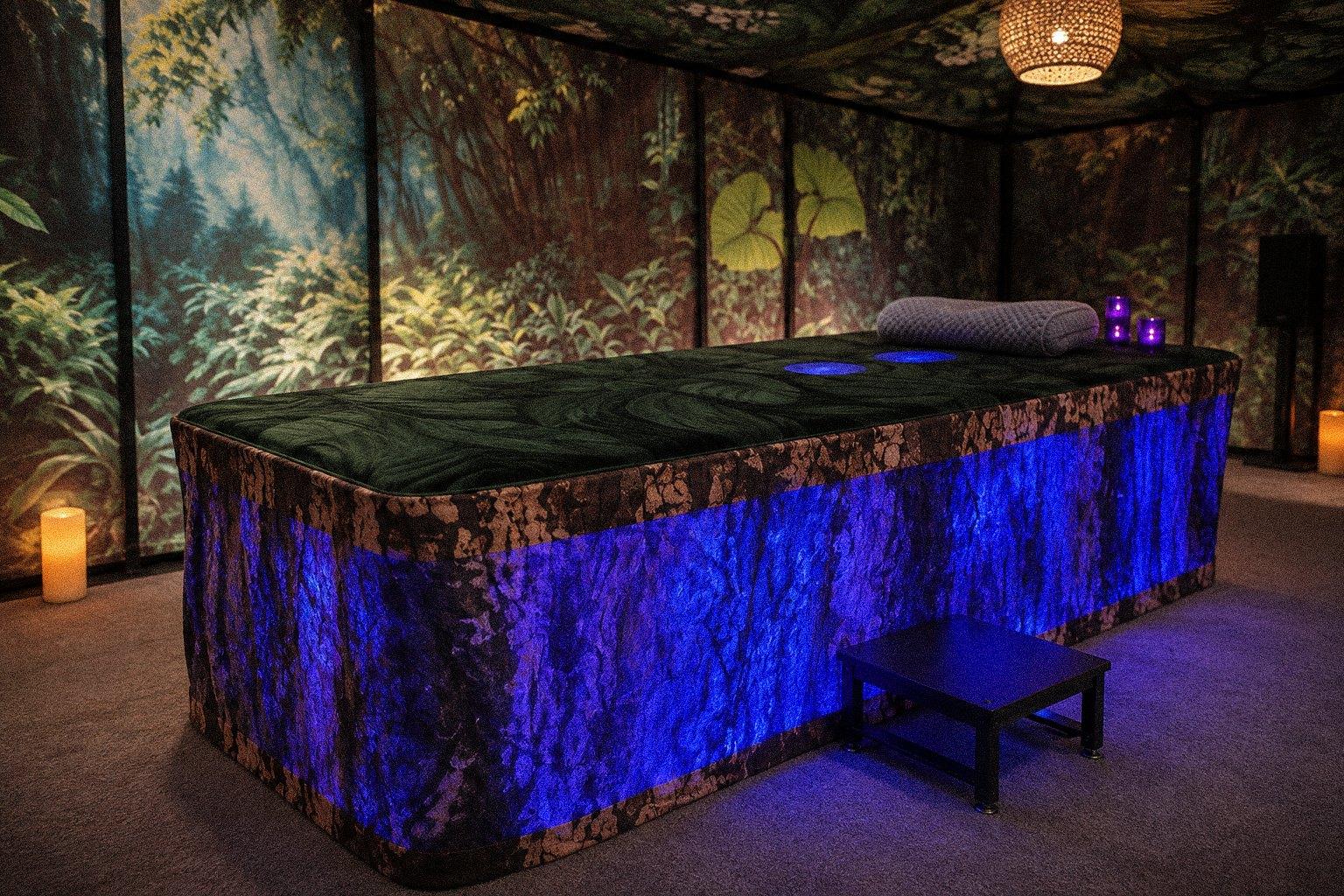
A private studio, not a busy lobby. Shoes off, phone away, something warm to drink.
A short conversation about what's going on and what you want to leave with. This shapes the set. Then you choose the colour of the light.
A fluffy blanket, an eye mask, a pillow beneath your legs. The music moves through the bed and through you, and your attention finally has nowhere to be but inside your own body.
A slow return, at your pace. Water, a few quiet minutes, a note on what you noticed. You walk out feeling more like yourself than when you walked in.
The room
The frequencies
Soundrise works across 4 to 1,000 Hz: healing and solfeggio frequencies, plus delta and gamma tones that match your brain's own rhythms. Vital blends them around what you need that day, under the music you hear.
Swipe along the scale and tap any point to see what it's for.Tap any point to see what it's for.
Delta · under 4 Hz
Restore
The slow rhythm your brain settles into during your most restful sleep. For nights that don't restore you.
Your blend is yours alone. Vital listens to what you're carrying, then chooses and layers the frequencies your body needs that day, live, as the session unfolds.

Why a DJ, and not a recording
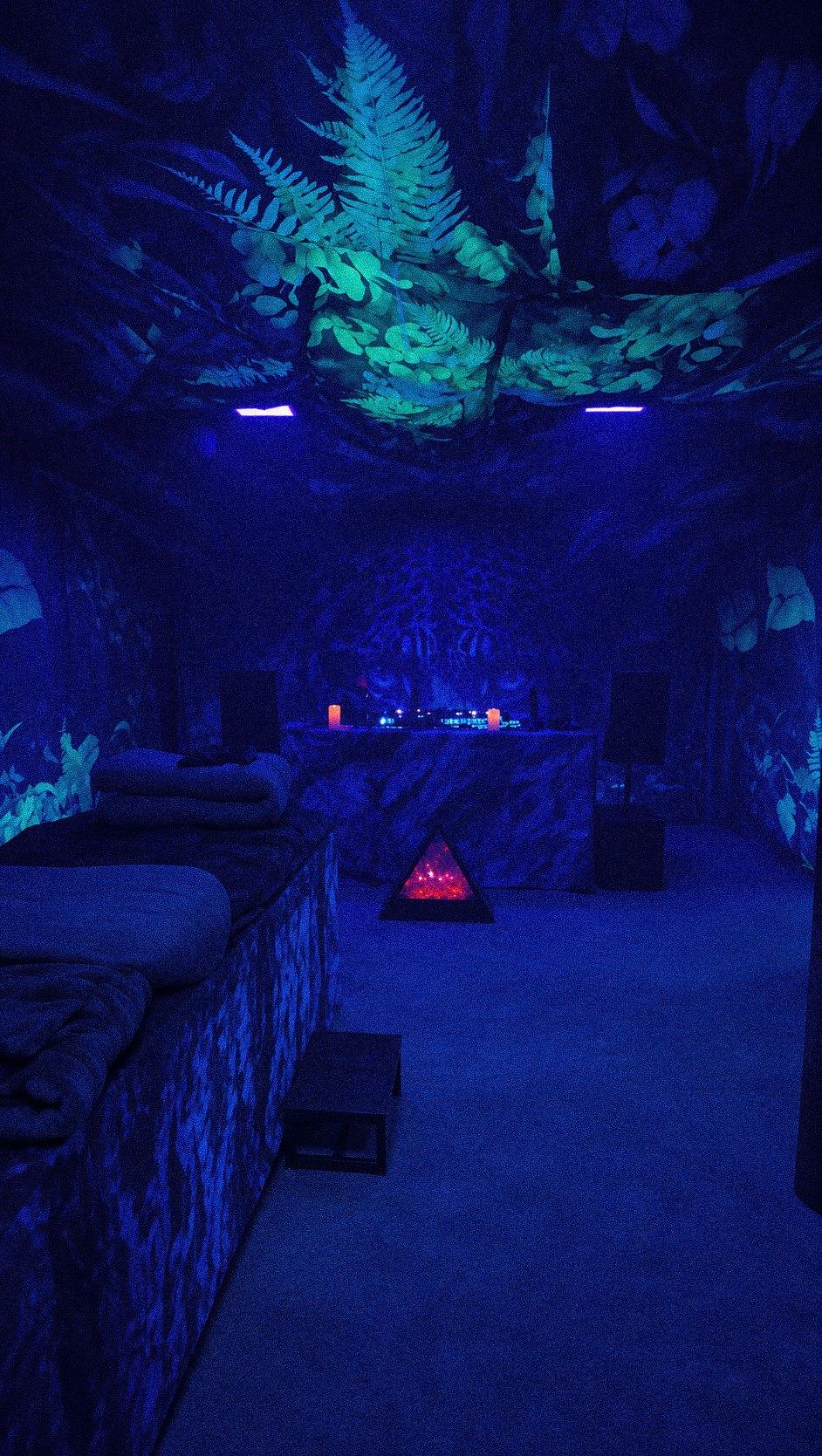
Vital has spent years behind the decks. At Soundrise he plays a few steps from the bed, reading one person instead of a room. He notices when your breathing deepens and your hands go still, and shapes the set around it.
Depth when you're ready for it. Space when you need it. A clean, gentle lift at the end, so you leave clear instead of foggy.
What you might feel
You can't do this wrong.
Check with your doctor first if you:
have a pacemaker or other implanted device, are pregnant, have a recent injury, fracture or surgery, or have active inflammation or a blood clotting condition. Not sure? Text us and we'll talk it through before you book.
Why it works
Vibroacoustic therapy sends sound through transducers built into the bed. You feel it as a slow, rolling vibration through your back, legs and chest, picked up by receptors in your skin and deeper tissue.
Because the vibration works through sensation first, it's somatic by nature: your body responds before your mind has to do anything.
Ancient times
Drums, chant and dance show up in healing rituals across the world.
Ancient Greece
Healing temples use music alongside medicine. Medicine for the body, music for the soul.
1980
Vibroacoustic research begins in Norway: sound you feel, not only hear.
Today
Sound-based therapy goes mainstream. Soundrise brings vibration, somatic and sound healing together, live.
104randomized trials
9,617people
Music reliably lowered both how stressed people felt and what their bodies showed, especially heart rate.
de Witte et al., Health Psychology Review, 2020Music in general
Music tailored to you
Effect on stress, compared
When a trained practitioner tailors it to the person, the effect on stress grows to medium-to-large. The case for a live set over a playlist.
de Witte et al., Health Psychology Review, 2022In a 2025 Lausanne study, the body's rest-and-recover side was still stronger half an hour after the session ended.
Hauser et al., Frontiers in Sports and Active Living, 2025Body-centred approaches, from massage to movement therapy, ease stress, anxiety and depression. The vibration starts in the same place.
Tarsha et al., Frontiers in Psychology, 2020Soundrise is a wellness experience, not a medical treatment. If you're managing a health condition, please check with your doctor first.
Read the full breakdown →Between sessions
Simple somatic practices that keep the thread between visits. None takes longer than five minutes.
5min
Breathe in through your nose, then take one more short sip of air on top. Let it all out slowly through your mouth. Repeat for five minutes.
2min
Close your lips and hum one low, steady note until you can feel it in your chest. The bed, on a smaller scale.
1min
Let your eyes move slowly around the space until they land on something you like. Then notice the floor under your feet.
The long exhale is based on cyclic sighing, which improved mood more than mindfulness meditation in a 2023 Stanford study.
How to use them →One session. A quieter mind, a body that's stopped bracing, and a calm that follows you home.